
Our collective American heritage: Honoring the past, understanding the present, creating a better future

Our collective American heritage: Honoring the past, understanding the present, creating a better future

Hispanic Heritage Month is truly about understanding American Heritage. In that spirit, I’d like to share a personal account and an invitation for us to explore our Collective American Heritage together. Hispanics have made lasting contributions to arts, music, food, sports, dance, civic leadership, military service, faith, labor, and entrepreneurship, all helping move America forward.
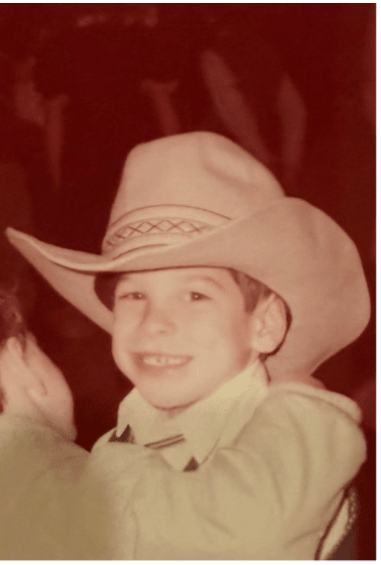
In 1983, my family moved from Caracas, Venezuela to Houston, Texas, for my father’s work. I felt both scared and excited. As a child, I imagined there was a chance I might get to ride a horse to school, since that’s what many foreigners believed about Texas from television and movies. I was sorely disappointed to learn I would be walking to elementary school instead. No pony!
My family originates from Puerto Rico, and I was born in Ponce, the island's second-largest city. Puerto Rico covers about 100 miles from east to west and 40 miles from north to south. It's situated in the Caribbean Sea, roughly 1000 miles southeast of Florida's tip. Growing up in a typical Puerto Rican household, no matter which country we were in, our home was always lively with music, rice and beans, many children (and not enough bathrooms), loud conversations, faith, occasional disagreements, excellent coffee, and a profound sense of warmth and togetherness.
Moving to Houston and living as a close-knit family in a very different culture was challenging. The first major hurdle was learning English and managing my accent so I could fit in. My father believed that enrolling me in the ESL (English as a Second Language) Program might actually hinder my language proficiency, so he encouraged me to immerse myself with native English speakers. Looking back, I see this helped me adapt more quickly. However, many Latino peers still face daily language challenges in school, work, and life. Sometimes, people are impatient with accents as we try to communicate. My siblings and I each have varying accents in both English and Spanish, depending on our birth order and where we attended school. For all five of us, speaking both languages has been a true asset in school, work, and relationships.
I realized that many of our customs seemed unusual to others. For example, during Christmas, I would place dry grass and hay outside on our front patio for the Three Kings’ camels on the evening of January fifth. I enjoyed discovering small gifts in my shoes in the morning. Sometimes, I wondered why the Three Kings didn't visit other houses. Perhaps those children had been bad, or maybe they didn't leave hay for the camels. Our tradition felt more closely aligned with biblical teachings than the idea of a man descending a chimney to leave presents under a tree. As a child, I found it hard to relate to that version of Christmas.
Another difference involved the custom of greeting others with hugs and kisses. In Puerto Rico, we often welcome people with embraces and a light kiss on the cheek, even after a formal introduction. This greeting was unusual in most of Texas and sometimes drew puzzled looks. Fortunately, in El Paso, Texas, I found a warm community where many residents are Hispanic and greet each other with hugs. El Paso feels like a small piece of Mexico within Texas, since this area was once part of Mexico. The people are very friendly, making it the most welcoming community I have known in the United States.
Adjusting to different perceptions of time was a significant shift for me. In Puerto Rico, time is viewed more flexibly. I often told friends I would be “there soon,” which in Latino culture might mean an hour or two. However, this attitude can seem disrespectful to Americans, who may find it rude or rushed. On the other hand, I initially saw their punctuality as overly rigid. Over time, I learned to clarify whether we were following American time or Latino time so everyone could understand and arrive on time.
The challenges I’ve described are neither exhaustive nor insurmountable, but they do illustrate the diversity of experiences that make up America. I share these stories to foster empathy for the adjustment process and to highlight the harsh reality of second-class citizenship for Puerto Ricans.
As someone born in Puerto Rico, a U.S. unincorporated territory, I am a U.S. citizen by birth. Puerto Rico is not a state, but we can travel freely to and from the continental United States. Puerto Ricans have a modified form of citizenship: we can serve in the military and be drafted, but residents of Puerto Rico cannot vote in U.S. presidential elections or elect members of Congress. As a Puerto Rican, I also cannot legally run for President of the United States, even with my prior service as a U.S. Marine. This is citizenship without adequate or equal representation. It is hard to believe this is still the case in 2026.
People have often asked me if I am American, Texan, Hispanic, or Puerto Rican. The answer is that I am all of these. Over time, I developed a self-image that combines my natural and acquired cultures into what I call TexaRican. It might seem unusual at first, but it actually makes sense. Texans and Puerto Ricans share many similarities. Both cultures are deeply proud of their history and identity. You will often see cars and trucks decorated with outlines of their territories, flags, loud music, and memorable sayings. Both groups have a strong desire to serve, which is reflected in their high rates of military participation. They also share a warrior spirit that comes through in boxing, sports, and on the battlefield. Additionally, both cultures value independence, pride in their state or nation, and celebrate their past as semi-autonomous regions. For these reasons, Puerto Ricans often feel at home in Texas.

All of this inspires me to celebrate Hispanic Heritage Month by sharing an article that, from a personal perspective, honors the contributions and influence of Latinos in making America the success it is. My family mirrors the many Hispanic families contributing to American achievement. We have generations of teachers, ministers, engineers, musicians, artists, entrepreneurs, and service members. Our family has served this country with distinction from World War II to the present, earning honors such as the Silver Star, Bronze Star (4), Legion of Merit, Purple Heart, and others. We also have a family member who served as the Mayor of a Texas city, exemplifying our commitment to civil service.
My hope is that, as you read this, you'll see that all of us are working together to build businesses, protect our national interests, educate our communities' children, strengthen our spiritual lives, and beautify our neighborhoods. Many forces aim to divide us because they benefit from discord. I trust that sharing this personal story will foster more unity, understanding, and progress as we respect our diverse American Heritage. Per Unitatum Vis, Per Varietas Felicitas (Through Unity Strength, Through Diversity Success). This embodies the American spirit. We are stronger united, and our differences enhance our strength.
View original article here.
Additional Info
Related Links : https://www.cuinsight.com/our-collective-american-heritage-honoring-the-past-understanding-the-present-creating-a-better-future/
Source : CUInsight.com